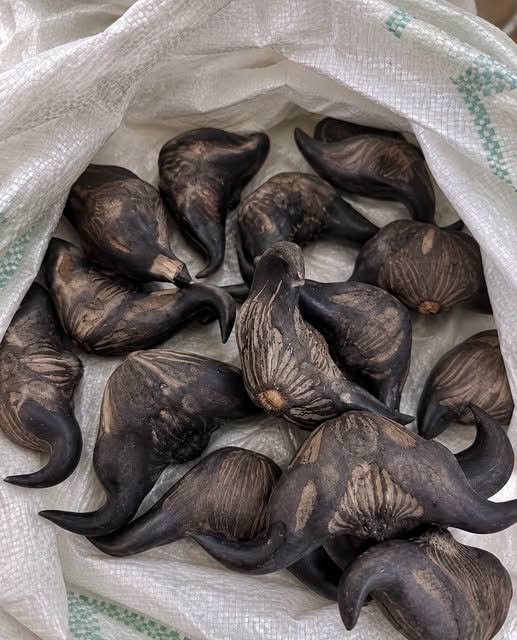
At first, they look like cursed artifacts. Black, horned, and hard as stone, the strange fruits in that plastic bag feel more like weapons than food. You turn them over in your hands and ask yourself: are these even safe to eat? One wrong assumption, one careless bite of a raw freshwater pla…
They’re called water caltrops, but their nicknames—devil’s nuts, bat nuts, buffalo nuts—capture the real drama of their appearance. Dark, angular shells bristling with horns hide a pale, starchy kernel that has quietly fed families across Asia for generations. Boiled or steamed, then cracked open with care, they reveal a mild, chestnut-like interior that slips easily into snacks, porridges, sweets, and savory dishes.
Yet the real story isn’t just culinary; it’s cautionary. Growing in ponds and lakes, these fruits share their world with parasites and microorganisms that can turn a raw bite into a medical problem. Identification by photo is never enough. Before you eat one, you need to know the species, the water it came from, and the traditional way it’s cooked. Handled wisely, water caltrops transform from menacing curiosities into a humble reminder: some of nature’s strangest designs hide ordinary, nourishing food—and serious responsibility.
