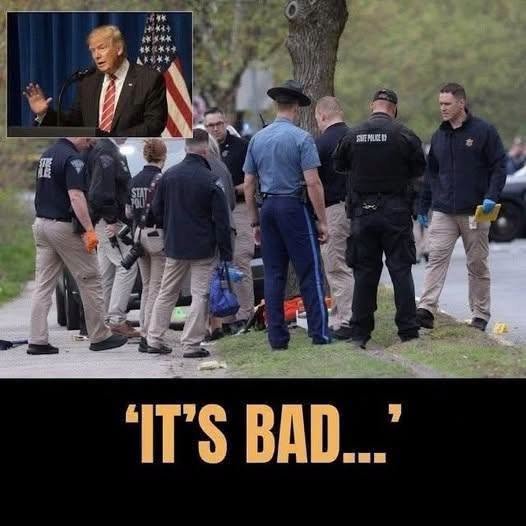
A headline such as “Trump Ally Attacked — Doctors Say He May Not Live After…” is almost guaranteed to attract attention because it is short, frightening, and leaves the most important information unfinished. Who was attacked? What happened? Where did it happen? Who are the doctors, and what exactly did they say? The reader is encouraged to click before receiving those answers. This type of headline has become increasingly common across social media, advertising networks, video platforms, and low-quality news websites, where political figures, celebrities, athletes, and other well-known personalities are often used to create an immediate emotional reaction. However, a sensational headline is not evidence, and there is an important difference between claiming that something happened and providing verified reporting that it actually did.
The wording is powerful because it combines politics, fear, urgency, and curiosity. The phrase “Trump ally attacked” immediately establishes a political connection, while “Doctors say he may not live” creates an even stronger sense of danger. The headline deliberately withholds key information, creating what is often called a curiosity gap—the reader knows there is supposedly a dramatic story but does not know the conclusion. Political personalities are particularly effective for this strategy because supporters may click out of concern, opponents may click because they want to know what happened, and neutral readers may click simply because the story sounds extraordinary. Social-media phrases such as “See more…” can strengthen the effect by hiding the full story and encouraging users to click.
There is also a strong commercial incentive behind many sensational headlines. Websites can earn money through advertising, traffic, impressions, and engagement, meaning that even a single click can have financial value. A headline can also be misleading without being completely false. A minor incident might be presented as a terrifying attack, while vague phrases such as “doctors say” can create an appearance of authority without identifying the doctors, hospital, family representative, police agency, or credible news organization involved. Readers should therefore look for specific details: who was involved, when and where the event occurred, what exactly happened, who confirmed it, whether authorities made a statement, and whether reputable news organizations independently reported it. Dramatic photographs and social-media comments should also not be treated as proof, because images can be old, unrelated, manipulated, or taken from another event, while comments often simply reflect reactions to the original headline.
The best response to a dramatic political or celebrity story is neither automatic belief nor automatic disbelief—it is verification. Readers can identify the person involved, find the original claim, check independent reputable sources, confirm the date, and look for statements from representatives, authorities, family members, or other directly involved sources. If those steps cannot establish the claim, the headline should not be treated as confirmed. The larger lesson extends far beyond the example of “Trump Ally Attacked.” Similar formulas appear every day with celebrities, politicians, singers, and public figures: create an emotional reaction, withhold key information, encourage the click, and monetize the attention. In an online environment where attention is valuable, readers need to pause before sharing, examine the evidence, and remember that clicking is not the same as confirming.
